REEF SCIENCE · COMPARISON
Which reef ICP test should you actually buy?
ATI, Triton, Oceamo, Fauna Marin. Four labs, four price points, four sets of "ideal" ranges, and a forum thread for every possible opinion. Here's what actually separates them, and the one decision that matters more than the brand on the box.
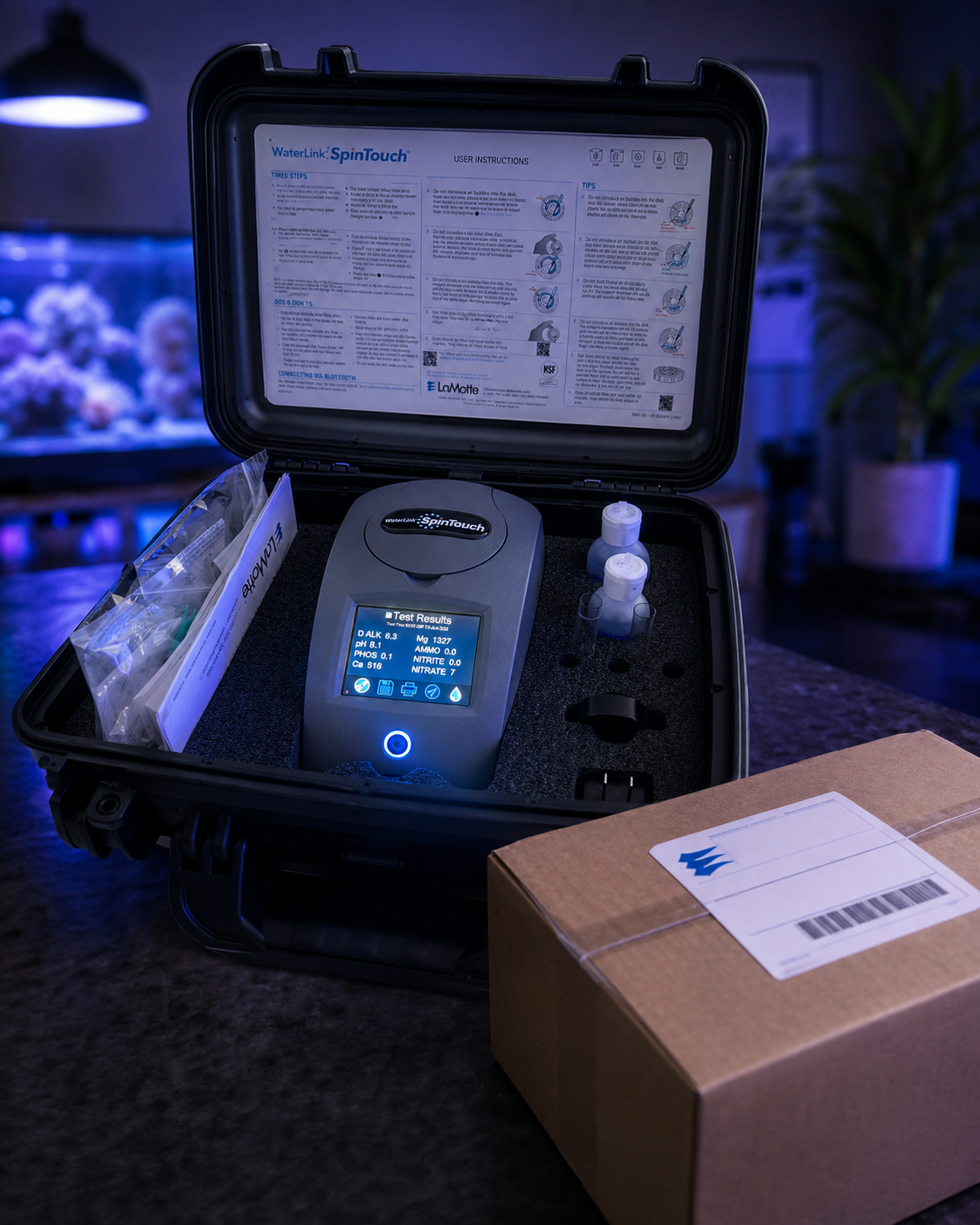
Here's the uncomfortable part first: nobody writing lab comparisons on the internet, including me, has run certified reference seawater through all four of these labs blind and published the numbers. Every "which ICP is best" thread you've read is running on brand loyalty, one-off anecdotes, and marketing pages. So this comparison is going to stick to what's actually documented: what each lab measures, what it costs, what technology it runs, and what the peer-reviewed chemistry says about how much lab-to-lab differences should worry you.
Quick disclosure so you know where I stand: BioForge validates its own product batches through Reef Labs, and our Decode service reads results from any of the labs below. I don't make money from your lab choice. I make money if you want help acting on the results, whoever runs them.
The three things worth understanding
- The labs differ less than their marketing does. All four run genuine ICP instruments, cover the majors and a long list of traces, and cost between $25 and $65 a test as of August 2026. The differences are real but second-order: detection technology, parameter count, turnaround, and the software around the numbers.
- Lab-to-lab disagreement is chemistry, not scandal. Peer-reviewed work on seawater analysis shows that calibration choices and the salt matrix itself measurably shift ICP readings.5 Two honest labs can hand you two different numbers for the same water. That's expected, and it's the core reason consistency with one lab beats shopping around.
- The best lab is the one you'll use on schedule. A $25 test you run every month builds a trend line. A $65 test you run twice a year is two disconnected snapshots. Price yourself into a cadence you'll keep, because the trend is where the value lives.2
OES vs MS: what the acronyms buy you
Every lab here uses inductively coupled plasma: your sample gets vaporized in an argon torch running hotter than the surface of the sun. The split is in what happens next. ICP-OES reads the specific wavelengths of light each element emits as it cools. ICP-MS pushes the ionized atoms into a mass spectrometer and sorts them by weight.3
The practical difference is detection limits. MS can see concentrations far below what OES resolves, which matters for ultra-trace elements and low-level contaminants like lead or tin creeping up from a failing piece of equipment. But seawater is a brutally difficult matrix for either instrument: the overwhelming wall of sodium, chloride, and magnesium interferes with the faint signals of everything else, and published methods work hard on calibration and dilution to compensate.5 The instrument's spec sheet is the ceiling, not the guarantee.
There's also a limit no instrument tier escapes: ICP reports total concentration, not chemical form. Marine chemistry research on iodine, to take the best-studied example, shows corals respond to the specific species of an element present in the water, and iodide, iodate, and organic iodine are very different things that one ICP number lumps together.6 Paying for MS gets you a lower floor. It does not get you a different kind of answer.
The four labs, honestly
Prices and parameter counts below were checked August 2026 and will drift. Treat them as a snapshot, and check the labs directly before ordering.
ATI
The German lab most hobbyists mean when they say "the standard." Two tiers: an ICP-OES test around $45 covering roughly 40 parameters, and an ICP-MS tier at about $65 covering closer to 50.1 ATI's differentiator is that both tiers include a separate analysis of your RO/DI water alongside the tank sample, which turns every test into a built-in source-water check. Turnaround runs about a week once the sample lands. If you want the widest coverage with a contamination-hunting bent, this is the strongest default.
Triton
The lab that invented the category, and still the most opinionated about what the numbers are for. Around $49 a test covering about 45 parameters, cheaper in multipacks, run on ICP-OES with their published lab methodology.3 Triton's real product is the ecosystem around the test: dosing recommendations, their N-DOC organics add-on, and the TRITON Method itself. The tradeoff is that the detailed target ranges live behind their platform, and their recommendations naturally point at their own supplement line. If you run the Triton Method, testing with anyone else makes little sense. If you don't, you're paying partly for an ecosystem you won't use.
Oceamo
The Austrian lab with the strongest reputation among chemistry-forward reefers, run by an analytical chemist who is unusually public about methodology. Around $64 gets you their ICP-MS based analysis, with OES options below that. Oceamo's pitch is rigor: seawater-matched calibration and conservative, well-explained recommendations. The tradeoffs are price at the top of the band and, depending on your region, shipping time to Europe eating into your cadence.
Fauna Marin
The value play. Around $25 a test from a large German manufacturer, covering the standard element list on ICP-OES. The reports are competent and the price makes a monthly habit affordable in a way the $65 tests don't. The tradeoff mirrors Triton: Fauna Marin sells a full supplement line, and the recommendations engine points at it. Take the numbers, apply your own judgment to the shopping list.
Why the same water gets different numbers
Send one sample split two ways and you will get differences, sometimes uncomfortable ones. Before that shakes your faith in the whole category, know that analytical chemists expect this. Peer-reviewed seawater work documents how calibration standards, dilution protocol, and the salt matrix each nudge results, especially near detection limits where trace elements live.5 On top of the instrument differences, each lab publishes its own opinion of "ideal," so the same number can be flagged green at one lab and yellow at another.4
This is the strongest argument for the one-lab rule. Within a single lab, the instrument, calibration, and ranges stay constant, so a change in your numbers means your water changed. Across labs, a change in your numbers might just mean the methodology changed. I've written more about what ICP can and can't see in why your ICP results don't match your tank, and about working through a report step by step in how to read your ICP results from any lab.
How to actually choose
If budget decides: Fauna Marin monthly beats anything else quarterly. If contamination hunting decides: ATI's included source-water analysis or an MS tier earns its premium. If you run the Triton Method: Triton, obviously. If methodology transparency is what builds your trust: Oceamo. And if you're already testing with any of these and your tank is doing well: stay put. Switching costs you your baseline, and the baseline is the most valuable thing you own.
Whichever you pick, the test is the cheap part. The expensive part is what most reefers do next: six corrections by the weekend, three new bottles, and a report thirty days later that can't tell them what worked. The order you act on results matters more than the lab that produced them, and that sequence is covered in the order of operations guide. If you'd rather have the whole thing built for you, Decode reads your results from any of these labs, weighs them against your tank profile, livestock, and photos, and returns one prioritized written plan. $39, no subscription, no supplement line to sell you.
Further watching
Worth your time if you want the video version of this territory:
FAQ
Which reef ICP test is the most accurate?
Nobody outside the labs can honestly answer that, because no independent public accuracy shootout with certified reference seawater exists across all four. What is documented is that calibration and matrix handling shift readings between instruments, so the practical answer is: the most accurate lab for you is the one you use every time, because your trend line stays comparable.
What's the difference between ICP-OES and ICP-MS?
Both vaporize your sample in a plasma torch. OES reads the light elements emit; MS weighs the ions directly. MS reaches lower detection limits, which matters for ultra-trace elements and contaminants. For the majors and common traces that drive most reef decisions, a well-run OES is sufficient.
How much does a reef ICP test cost?
As of August 2026, roughly $25 to $65 per test. Fauna Marin sits around $25, ATI's ICP-OES around $45, Triton around $49 with multipack discounts, and the ICP-MS tiers from ATI and Oceamo around $65. Prices change, so check the labs directly.
Should I switch labs if my results look wrong?
Usually no. Each lab publishes its own target ranges and calibrates its own instruments, so switching labs resets your baseline and makes your history unreadable. If a single result looks wild, retest with the same lab before concluding anything. Switch only if turnaround, support, or repeated inconsistency gives you a concrete reason.
Does Decode work with results from any lab?
Yes. Decode reads ICP results from ATI, Triton, Oceamo, Fauna Marin, Reef Labs, and others, weighs them against your tank profile and photos, and returns one prioritized written plan. $39, no subscription.
Sources & further reading
Every factual claim in this article is sourced from lab documentation, established reef publications, and peer-reviewed marine science. If you want to verify anything yourself, here are the primary references:
WHICHEVER LAB YOU PICK
Decode turns any lab's report into one written plan.
Submit your ICP results from ATI, Triton, Oceamo, Fauna Marin, or any other lab, plus your tank profile and photos, and get a prioritized plan with a built-in retest date. $39, no subscription, no supplement line attached.