REEF SCIENCE · TROUBLESHOOTING
Tin showed up on your ICP test. Here's where it's coming from.
Elevated tin is one of the most googled ICP results in the hobby, and one of the most misunderstood. The number is rarely the problem. It's a tracer pointing at something in your system that's leaching or corroding.
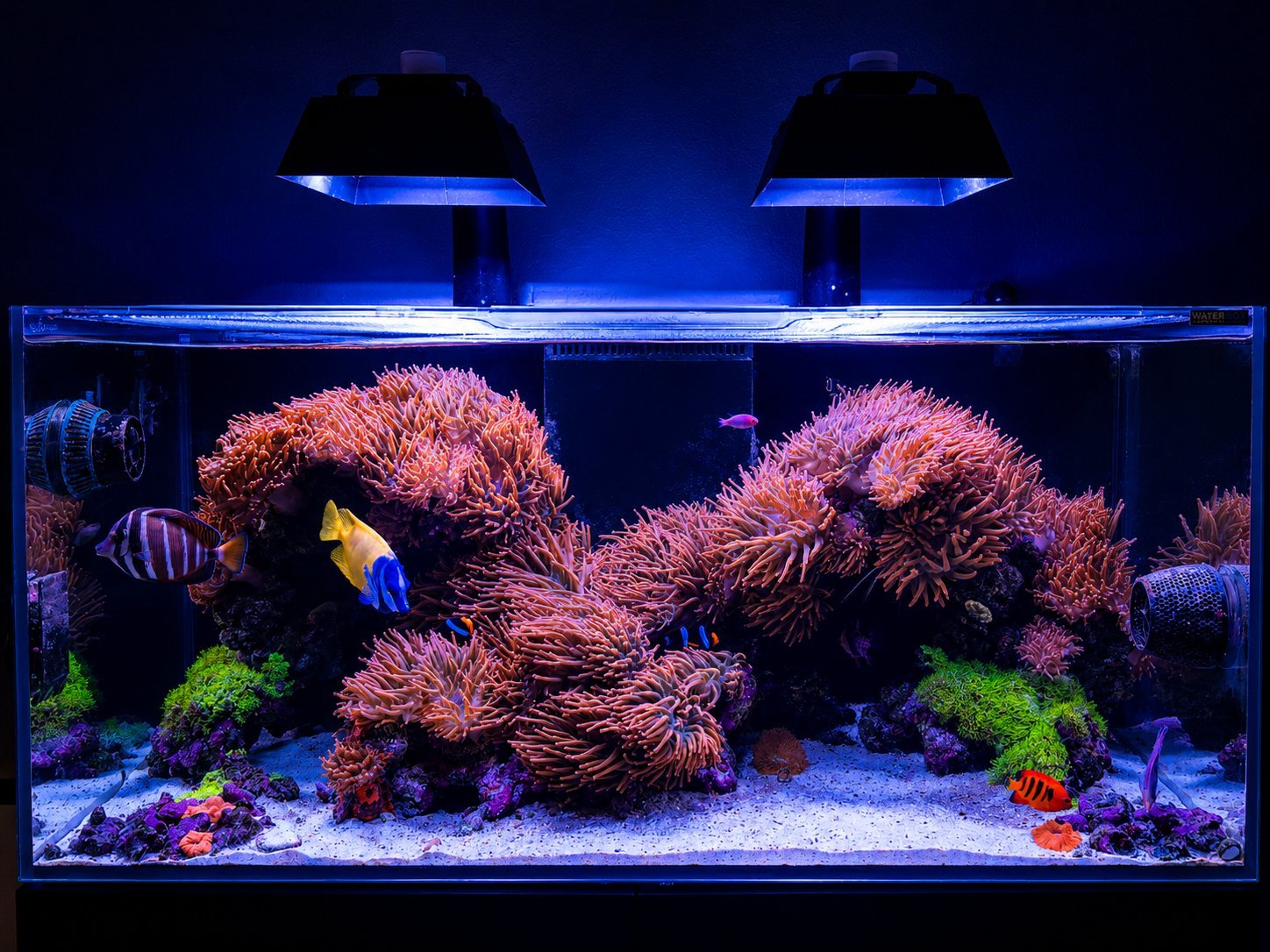
You open your ICP report, scroll past forty numbers you feel fine about, and hit a red bar next to an element you've never once thought about: tin. Then you search "tin reef tank" and the first results are toxicology papers about poisoned oysters and forum threads about lost coral colonies. Deep breath. Most elevated tin readings end with someone finding a rusty screw or swapping a length of tubing, not with a crashed tank.6
Quick disclosure so you know where I stand: I run BioForge, and Decode, our $39 report-reading service, exists precisely for moments like this one. I'd obviously rather you use it than panic-buy equipment. But everything below is the same process I'd walk a friend through for free, sources included, so you can run the whole hunt yourself.
The three things worth understanding
- Tin in your water came from inside the system. Natural seawater carries almost none, and clean salt mixes contribute almost none. An elevated reading nearly always traces to something you installed.
- The toxicity literature is mostly about a different tin. Organotin compounds like tributyltin are ferociously toxic to marine life and are the reason tin has its reputation. Inorganic tin, the more likely form leaching from your plumbing, is far less studied. Your ICP can't distinguish them.
- The fix is a hunt, not a product. Confirm with a retest, find the source, remove it, dilute with water changes, then let the next test tell you whether you got it.
Why tin has its reputation, and what your report actually measured
The reason "tin" and "reef" make such a frightening search pairing is tributyltin, or TBT. For decades it was the active ingredient in antifouling boat paint, and it turned out to be one of the most destructive compounds ever released into coastal water. Peer-reviewed work has shown TBT inhibits coral fertilization and blocks larval metamorphosis at concentrations around 2 micrograms per liter,1 disrupts reproduction in marine snails at nanogram-per-liter levels,2 and damages immune function across marine invertebrates broadly.3 The World Health Organization flagged organotins as a serious marine hazard back in 1990, and TBT has since been banned internationally.4
Here's the part the horror stories skip: your ICP report measured total tin, the element. It cannot tell you whether that tin is an organotin like TBT or plain inorganic tin leached from a stabilizer in your plumbing.5 Those are very different animals. Inorganic tin is poorly soluble, poorly absorbed by organisms, and has nothing like TBT's documented toxicity. And nobody has published a dose-response curve for inorganic tin in a reef aquarium, which means every "safe level" you'll see quoted on a lab's color scale is an educated guess, not a measured threshold.
So an elevated tin number is neither harmless nor a catastrophe. It's information: something inside your system is shedding a metal that doesn't belong there, and things that shed tin often shed other stuff too. That's the honest reason to act on it.
The usual suspects, in order of how often they're guilty
Years of forum detective work have produced a surprisingly consistent lineup. The community's most useful rule of thumb: look at what else moved on the report.5
If tin is the only metal elevated: think plastic
Tin compounds are used as heat stabilizers in some PVC and vinyl products. Hobbyists have traced isolated tin readings to flexible return tubing, PVC pipe and fittings, skimmer bodies, and kalkwasser reactor parts.57 New plumbing is a prime suspect: leaching is usually strongest when a product is fresh. If your tin reading appeared a test or two after an equipment install or a re-plumb, start there.
If tin rises alongside iron, copper, or zinc: think corroding metal
Solder and alloy parts contain tin, and rust events rarely leak one element at a time. Confirmed sources in community threads include rusting algae magnet cleaners, degrading pump wetsides, a metal screw inside a ball valve sitting in the sump, and cabinet hinges corroding above splash zones.67 One reefer's tin problem ended entirely when a single valve with a hidden metal screw came out of the sump.6 Pull your magnets apart and look for rust weeping at the seams. It's the most common single culprit I've seen.
Small tanks concentrate the problem
The same leaching part sheds the same milligrams into 30 gallons or 300. In a nano, tin builds several times faster, which is why small tanks dominate the elevated-tin threads.5 If you run a small system, weight your suspicion toward whatever touches the water the most per gallon: tubing, pumps, magnets.
The fix, in the right order
- Confirm before you demolish. One elevated number on one report, with healthy corals and no other metals moving, can be sample contamination or lab noise. Retest with the same lab. Same lab matters, because trace readings don't transfer cleanly between labs, something I covered in the ICP comparison. Two elevated results in a row is a real signal.
- Hunt with the report, not a flashlight alone. Tin alone, inspect plastics newest-first. Tin plus friends, inspect metal: magnets, pumps, valves, hinges, anything rusting within drip distance of water.
- Remove, then dilute. Take the source out, then run a series of water changes with salt mixed in containers you trust. Dilution does most of the cleanup work once the input stops.
- Bind what's left, optionally. Metal-binding media like CupriSorb can pull residual tin and hobbyists report it working.5 It's a mop, not a fix. Use it after the source is gone, not instead of finding it.
- Retest in four to six weeks. A falling number confirms you found the source. A flat or rising one says the hunt isn't over. Either way, the retest is the verdict, not the water change.
The pattern here is the same one that runs through everything we publish: a single reading is a snapshot, and snapshots don't make decisions. Trends do. Tin just happens to be the element that teaches people that lesson with the most adrenaline involved.
Common questions, answered plainly
Where does tin in a reef tank come from?
Plastics and corroding metal, almost always. Tin stabilizers in PVC and tubing can leach, and rusting magnets, pump parts, screws, and hinges shed tin alongside other metals. Tin alone points to plastic; tin plus iron, copper, or zinc points to metal.
Is tin toxic to corals?
Organotins like TBT absolutely are: published work shows harm to coral fertilization and larval settlement at microgram-per-liter levels. Inorganic tin, the likelier form in your tank, is far less studied and has no established safe threshold in reef aquaria. Treat the reading as a reason to find the source, not proof of poisoning.
How do I get tin out of my tank?
Remove the source first, then dilute with water changes, then optionally run metal-binding media like CupriSorb for the residue. Media before the source hunt just filters an ongoing leak.
Could the reading just be wrong?
Possibly. Single-element spikes with healthy livestock deserve a same-lab retest before any teardown. Sampling contamination and trace-level lab variation are both real. Two consecutive elevated results is when it becomes a project.
My corals look fine. Do I still need to act?
Confirm it, at minimum. Whatever is shedding tin is degrading in your water, and degrading parts rarely improve on their own. Healthy corals buy you time to hunt calmly; they aren't a reason to skip the hunt.
Sources & further reading
WHERE BIOFORGE FITS
One red bar shouldn't run your whole month.
Decode reads your entire ICP report in context, weighs a tin flag against everything else that moved, and hands you a prioritized plan with a retest date. No guessing which number matters most. $39, no subscription, as of August 2026.